- calendar_today August 7, 2025
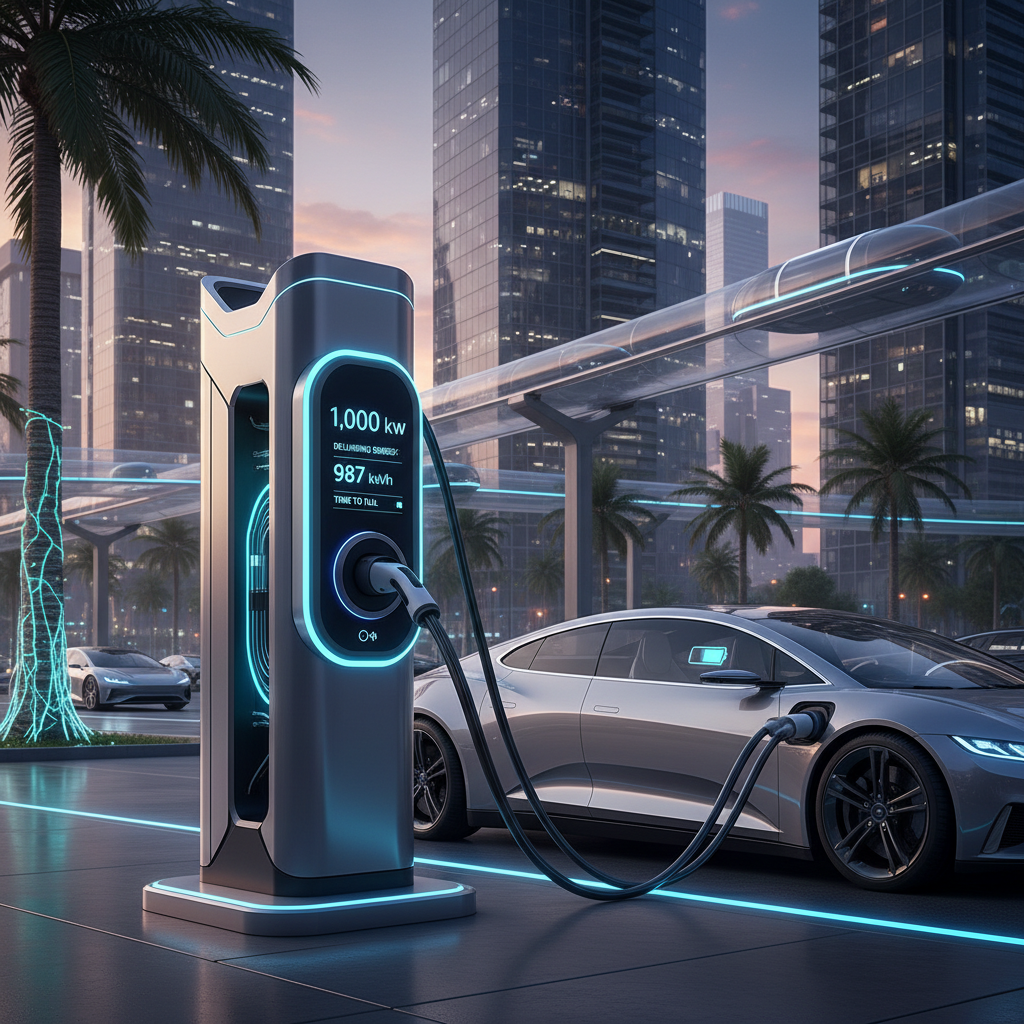
BYD the Chinese automotive titan that recently took over Tesla as the top global EV seller has revealed its ground-breaking “super e-platform” which represents a major advance in electric vehicle technology. The new system that delivers 10C charging abilities and 1,000 kW DC charging stations will substantially shorten EV charging periods to near the speed of gasoline refueling.
BYD’s innovation stands out because it enables vehicles to achieve 249 miles (400 km) of range within five minutes. This achievement dwarfs current industry standards: Tesla Superchargers achieve a maximum power of 250 kW whereas Electrify America chargers deliver up to 350 kW and Formula E high-performance chargers reach 600 kW.
Five-Minute Fuel: BYD’s 10C Charging Revolutionizes EVs
BYD chairperson Wang Chuanfu expressed the company’s goal to transform EV charging speed into a process matching the convenience of gasoline car refueling. The innovative core of BYD’s “super e-platform” technology includes batteries that achieve a remarkable charging rate of 10C. These advanced batteries achieve full charge status within five minutes under perfect conditions which creates a new standard for fast charging efficiency.
The use of powerful 1,000 kW DC chargers advances this breakthrough technology by facilitating fast energy transfer which leads to much shorter charging periods. BYD’s rollout of its innovative charging technology will be supported by the installation of more than 4,000 megawatt chargers throughout China to form a tailored network for their new EV models such as the Han L sedan and Tang L SUV.
Besides reducing charging duration, BYD targets improvements in both the reach and dependability of its charging stations. The company plans to extend its high-capacity charger network to reduce range anxiety and boost user convenience thus transforming electric mobility into an attractive and practical option for Chinese drivers. BYD demonstrates its dedication to advancing EV technology through this daring move that facilitates the worldwide movement towards sustainable transportation.
BYD continues to expand its global market reach, especially in Europe but encounters major political barriers when trying to enter the US market. Both Democratic and Republican members of Congress have joined forces to block Chinese EV companies from establishing a presence in the United States market based on national security risks and economic threats.
Understanding the differences between range estimation standards remains essential. BYD’s 249-mile figure emerges from the CLTC standard which is more lenient compared to the US EPA standard. The range produced during EPA evaluations tends to show lower values compared to other testing standards.
Other automakers that operate primarily in the US market may still consider licensing BYD’s technology as an option. If automakers with a US market presence license BYD’s technology it will speed up the implementation of faster charging standards across the country while reducing political obstacles and making rapid charging more widely available.
The 1,000 kW charging stations deliver large amounts of energy to vehicle batteries very quickly. Charging efficiency in real-world situations depends on variable elements including battery temperature, state of charge, and the quality of the charging infrastructure. The efficiency of the vehicle quantified in kilometers per kilowatt-hour affects how much driving range is added during a charge.
BYD’s “super e-platform” marks a breakthrough in electric vehicle charging technology that may speed up EV adoption through its solution to the pressing problem of lengthy charging times. Through its dedication to developing strong charging networks in China, the company strengthens its leadership status in the worldwide EV market.