- calendar_today August 12, 2025
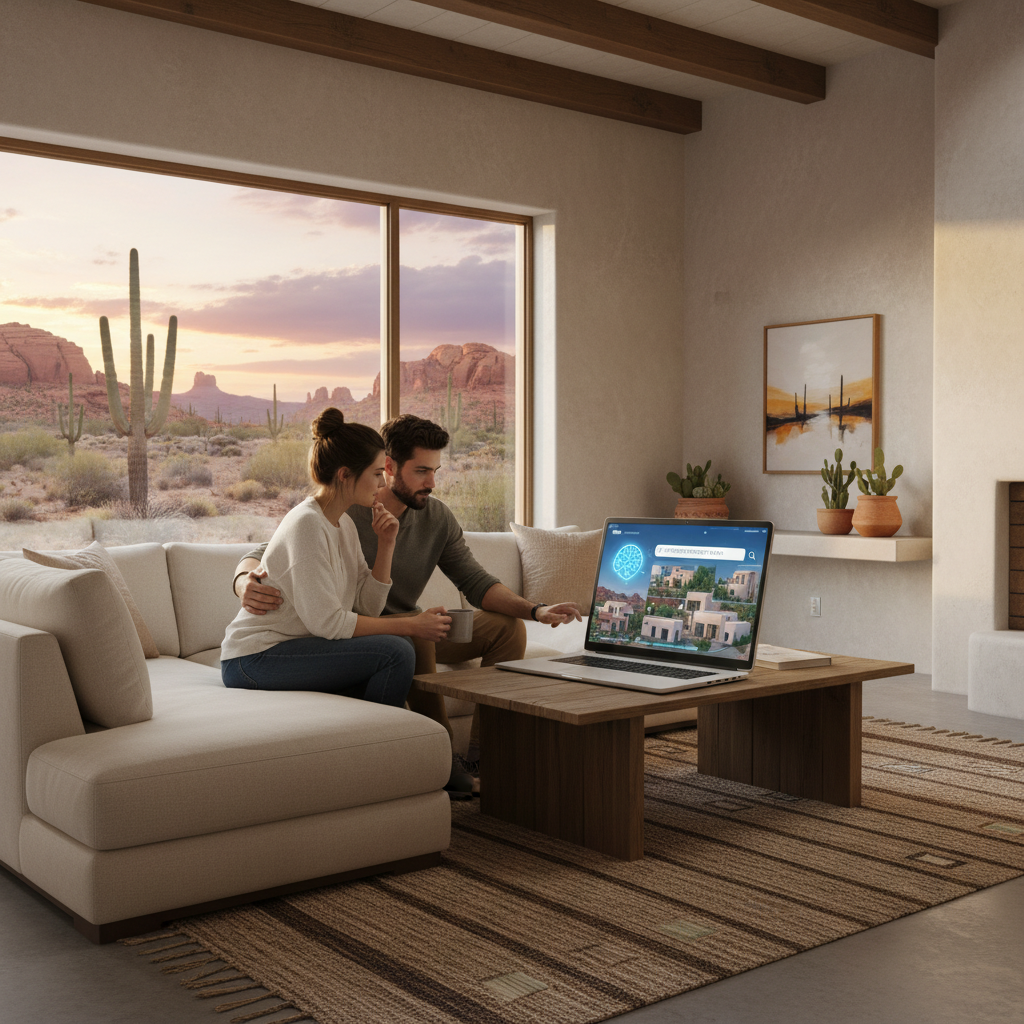
Artificial Intelligence (AI) is reshaping industries across the board, and in 2025, the real estate market in the American Southwest is seeing its own tech transformation. With buyers facing high demand and rising costs in cities like Phoenix, Las Vegas, Tucson, and Albuquerque, AI has emerged as a powerful tool—simplifying searches, refining pricing, and making financing more efficient.
This new generation of AI isn’t just behind the scenes—it’s fundamentally changing how homebuyers across Arizona, New Mexico, Nevada, and West Texas interact with the real estate market. From predictive pricing models to AI chat assistants and digital paperwork review, technology is helping Southwest buyers make faster, more informed decisions in one of the nation’s most dynamic housing regions.
Here’s how AI is driving progress in the 2025 Southwest real estate market—and what homebuyers should keep in mind this year.
Generative AI in Real Estate
Generative AI—best known for powering conversational tools and creating digital content—is now playing a visible role across Southwest real estate platforms.
In cities like Phoenix and Las Vegas, agents and brokerages are using AI to draft property descriptions, generate personalized marketing materials, and automate responses to buyer inquiries. This creates faster turnaround and allows agents to serve more clients with tailored communications.
On major platforms like Zillow and Realtor.com, natural-language search powered by generative AI is transforming how people browse homes. Buyers can input specific phrases like “affordable home with solar panels near Tempe schools,” and get accurate, localized results. This convenience has become an expectation for tech-savvy buyers.
Virtual staging and AI-powered home walkthroughs are also on the rise, especially in markets like Henderson and El Paso, where developers and flippers use these tools to showcase potential. These virtual experiences help buyers make faster decisions—often without needing to visit in person.
Benefits of AI in Real Estate
AI brings multiple benefits to Southwest homebuyers in 2025, particularly in terms of speed, personalization, and market transparency.
One of the biggest improvements is in pricing accuracy. AI-driven pricing tools analyze recent comps, neighborhood trends, and current market momentum to produce realistic property valuations. In fast-moving areas like Scottsdale or Santa Fe, this helps buyers spot overpriced listings or move quickly on value buys.
Another major boost is AI-driven mortgage pre-approval. Fintech platforms serving the Southwest region now analyze borrower financial data in real time, producing pre-qualification letters in minutes. This is especially helpful in competitive environments like Las Vegas, where timing can make or break a deal.
AI also improves property matching. Instead of relying solely on filters like zip code or square footage, platforms use behavioral data and stated preferences to recommend listings with better fit. In Tucson or Albuquerque, this helps buyers navigate sprawling markets more efficiently.
In 2025, AI is even assisting with contract reviews. Buyers—especially first-timers—can rely on machine learning to flag risks or omissions in standard purchase agreements, helping reduce the likelihood of errors or missed disclosures.
Challenges and Ethical Considerations
Despite its promise, AI in Southwest real estate comes with key concerns—especially around fairness, privacy, and transparency.
AI systems are only as reliable as the data used to train them. If past housing decisions—many shaped by inequality or limited access—are baked into AI models, they can reinforce historical biases. This is a concern in cities with legacy zoning issues or wealth gaps, like El Paso and parts of rural New Mexico.
Privacy is another issue. Buyers using real estate apps often don’t realize how much personal data—such as browsing patterns, income details, and search histories—is collected and used for algorithmic recommendations.
Finally, a lack of algorithm transparency creates trust issues. For example, buyers may wonder why a home in Chandler is being promoted over another nearby or why a pre-approval was denied. As AI takes on a more central role in financial decisions, regulators and developers are being urged to provide more visibility into how these tools work.
Southwest Homebuyers and the AI Shift in 2025
AI tools are now mainstream for many homebuyers in the Southwest—especially among younger demographics. Millennials and Gen Z buyers across Arizona and Nevada have embraced AI-powered platforms that offer tailored suggestions and fast support.
In markets like Phoenix, Las Vegas, and Santa Fe—where bidding wars and tight inventory remain common—buyers using AI tools have a noticeable advantage. Real-time listing alerts, dynamic valuation tools, and 24/7 chatbot assistance enable users to act quickly and confidently.
However, tech adoption remains uneven. In rural areas of New Mexico or West Texas, where connectivity and digital literacy may lag, many buyers still depend on traditional agent-led processes. This divide has highlighted the need for digital equity across the broader Southwest region.
Market Insights and Trends
Analysts tracking real estate tech adoption in the Southwest note a strong upward trend in 2025:
- Over 62% of Southwest homebuyers used at least one AI-driven tool during their home search.
- Buyers using AI tools completed purchases nearly 3 weeks faster than those relying on traditional methods.
- Real estate firms using generative AI in marketing reported a 37% increase in qualified leads year-over-year.
Brokerages and listing platforms in Arizona and Nevada are investing heavily in proprietary AI tools tailored to regional pricing volatility, water usage data, and climate resilience factors.
Zillow and Redfin, both of which have a large footprint in the region, have upgraded their AI tools to better reflect desert-specific design trends, solar integration, and long-term energy efficiency ratings—features highly valued in the Southwest market.
Tech-Assisted, But Human-Centered
AI is giving Southwest homebuyers faster, smarter tools to manage an increasingly complex housing market. Whether it’s a young couple looking for their first home in Mesa or a retiree relocating to Las Cruces, AI tools offer clarity and speed when navigating high-stakes decisions.
Still, human expertise remains essential. While AI can highlight homes and flag document issues, it doesn’t replace local market knowledge, negotiation skills, or emotional intelligence.
For buyers in the Southwest U.S. in 2025, the best outcomes will come from combining the analytical power of AI with the experience of trusted real estate professionals—creating a smarter, more balanced path to homeownership.