- calendar_today August 17, 2025
In what was meant to be a press conference on a European Union trade deal, former US President Donald Trump spent a few minutes berating renewable energy. He called wind turbines a “con job,” insisted they drive whales “loco,” kill birds, and harm people. These kinds of claims aren’t news. They are part of a long history of conspiracy theories about renewable energy and have a global track record.
Trump uses the term “windmills” to describe the turbines. It’s a favorite phrase among climate deniers and contrarians, and his ideas echo an anti-wind energy panic that predated his presidency by at least a few years. Curiously, the same term was hurled at opponents of the telephone at the end of the 19th century. At the time, the public expressed genuine fear that connecting voice boxes to wires would let germs travel from far away, making people sick. It was a “moral panic,” a collective anxiety reaction that turns a threat into an existential one.
It also reveals a common pattern. As an economy moves from one kind of fuel to another, people get nervous about the change. There are threats to existing ways of living, new entrants who might take power from traditional elites, and perhaps most importantly, a future that feels less certain.
Those fears have been examined more deeply by scientists and researchers. They suggest it runs much deeper than a problem of public understanding or scientific illiteracy. Conspiracy beliefs and anxieties about change appear to become firmly rooted in a person’s way of thinking about the world, often impervious to fact-checking or science-based arguments. That’s a significant problem for governments, corporations, and institutions that want to speed up a clean energy transition.
The Conspiracy Origins and Global Growth of Anti-Wind
Climate scientists have been sounding the alarm about the environmental effects of carbon dioxide since at least the 1950s. By the 1970s, it was clear that burning fossil fuels could cause major and relatively rapid climate change. But it took a while for renewables to transition from a theoretical fringe movement to an existential threat to the fossil fuel industry.
One reason was time. By the time climate change became mainstream, oil, gas, and coal had a long head start. They had already built the infrastructure, refined the lobbying techniques, and captured key positions of power in the private sector and in government. It was always going to be a fight for renewables to catch up and overtake entrenched fossil fuel interests.
There are cultural artifacts that capture that spirit. The Simpsons cartoon was a popular reflection of a growing sense that the fossil fuel industry would do anything to hold onto power. In one episode, tycoon Mr. Burns constructs a 40-story skyscraper to block out the sun, forcing everyone in Springfield to buy his nuclear power. That was a fictional exaggeration, but it was an accurate representation of the fear that fossil fuel companies would actively resist the development of clean energy.
What’s more, those fears weren’t entirely misplaced. In 2004, then-Australian Prime Minister John Howard assembled a group of fossil fuel business leaders and dubbed it the Low Emissions Technology Advisory Group. Their role wasn’t to decarbonize the country as quickly as possible. The stated goal was to “find ways to slow the rate of growth in renewable energy.”
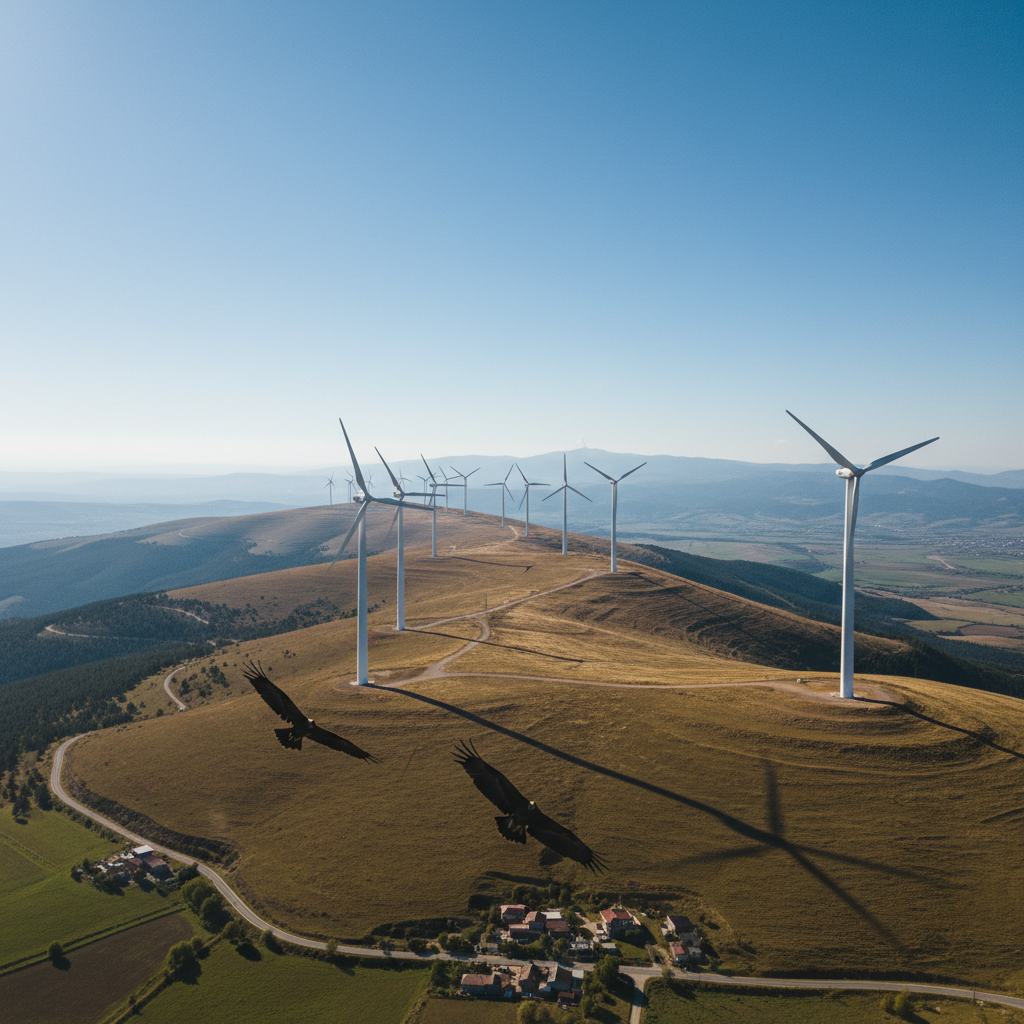
There were problems getting wind farms built and operational, too. Unlike coal mines, oil fields, and nuclear plants, wind turbines are usually visible to the public, either perched on ridgelines or out in the open on plains. That made them obvious targets for opponents and conspiracy theorists. The myths included “wind turbine syndrome,” which a group of doctors once called a “non-disease.”
Academics have investigated the matter further. Kevin Winter and his colleagues set out to see which was a better predictor of anti-wind farm opinions: demographics or worldviews. Using survey data from Germany, they found that conspiracy thinking was much more predictive of anti-wind attitudes than demographics such as age, gender, education, or political orientation. More recent work in the US, the UK, and Australia yielded similar results. Survey participants were asked to rate the legitimacy of 10 conspiracy ideas, such as whether climate change is a hoax or the government is out to control people’s lives. The stronger the tendency to agree with such conspiracies, the more likely they were to believe that wind turbines kill birds, cause cancer, and pose other health risks.
Presenting facts to conspiracy theorists and deep skeptics isn’t going to win the day. Sending them evidence that wind turbines don’t poison groundwater or cause blackouts doesn’t help, because these are worldviews, not misapprehensions. Wind and colleagues put it this way: “Resistance to wind farms was… rooted in people’s worldviews.”