- calendar_today August 27, 2025
Since January, the Trump administration has attacked the ESA multiple times, arguing that excessive regulations impede development and keep America from achieving “energy domination.” The executive orders signed by the president this year direct federal agencies to rewrite ESA rules in ways that would fast-track fossil fuel development, exempting it from the environmental reviews that would otherwise be required.
Burgum and other conservatives have characterized the law as broken, claiming that its strict rules do little to further recovery. Scientists and legal experts say the ESA is not to blame, but rather a lack of sustained political and financial commitment.
“We continue to wait until species are in dire straits before we protect them,” said David Wilcove, a professor of ecology and evolutionary biology at Princeton University. “That makes recovery far more difficult and expensive.”
The ESA has a solid track record of saving species from extinction, experts say, even if there is room for improvement on the recovery front. Since 1973, just 26 federally protected species have gone extinct. At least 47 others are believed to have disappeared while waiting for a listing.
“The ESA works more like a critical care unit than a hotel,” Wilcove said. “It’s as though we built a great hospital but never funded enough doctors or equipment.”
Arguably, the greatest example of the ESA’s power to save is the bald eagle. In the 1960s, rampant use of the pesticide DDT and habitat destruction left the national bird with just a few hundred nesting pairs in the lower 48 states. After DDT was banned and the bald eagle was granted ESA protections in 1978, numbers gradually improved. In 2007, the bird was removed from the endangered list, with almost 10,000 pairs nationwide.
Other notable species—including the American alligator and the Steller sea lion—have also made significant recoveries thanks to the ESA.
The ESA’s reach extends to private property as well as public lands, which is one of the primary reasons for conflict. More than two-thirds of listed species are dependent on private lands for at least a portion of their habitat, while about 10 percent are found there exclusively.
“If there’s an endangered species on your land, your ability to use that land is going to be limited, and you can be prosecuted,” said Jonathan Adler, a professor of environmental law at the University of Virginia’s William & Mary law school. “That discourages landowners from cooperating.”
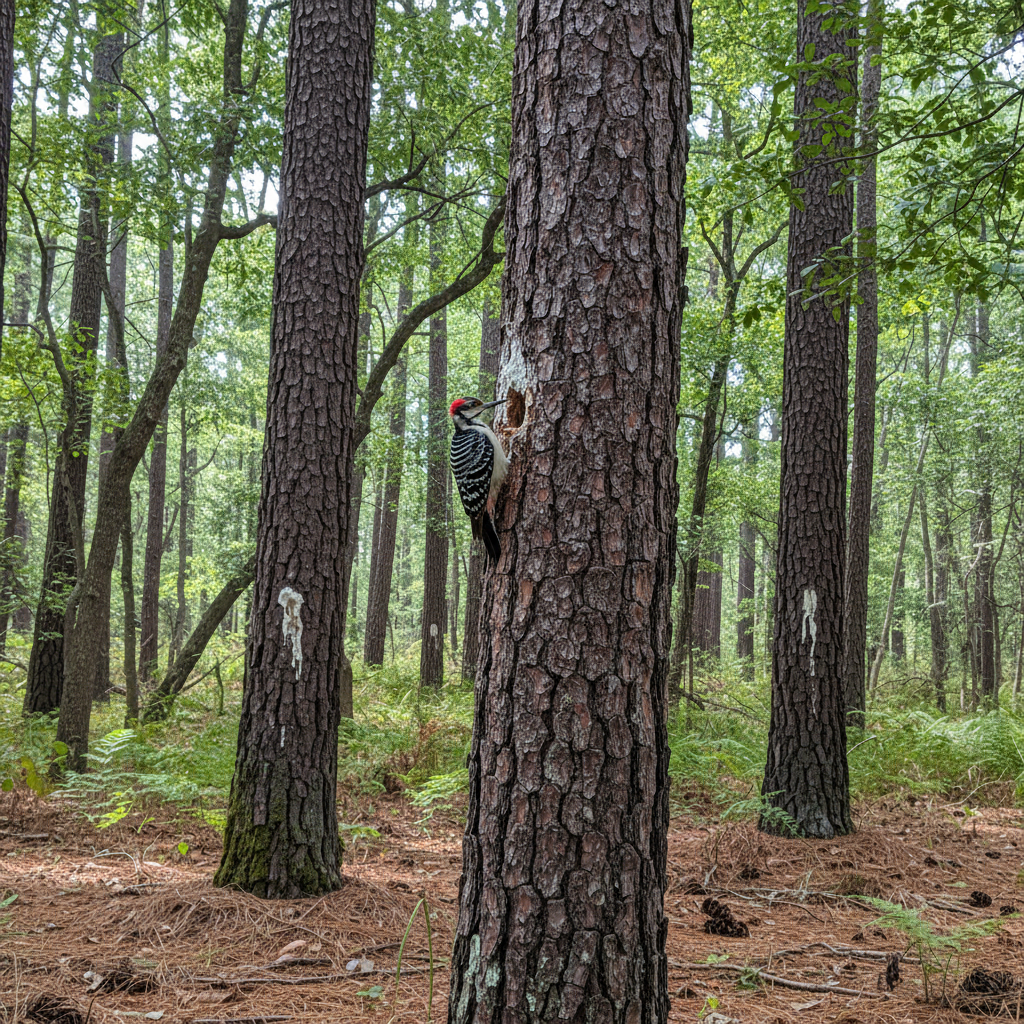
There is some evidence these rules have created “perverse incentives.” A study published in the journal Conservation Biology, for instance, found that timber was more likely to be harvested early on where the ESA-protected red-cockaded woodpecker lived, presumably to avoid federal habitat regulations.
Congress has passed a number of incentives over the years, such as tax breaks and conservation easements that offer financial benefits for landowners that protect habitats. Such programs, however, have decreased in recent years, raising concerns among many conservationists.
The Endangered Species Act used to have strong bipartisan support, but has since become one of the most litigated environmental laws in the country. Attempts to weaken it have been introduced under several administrations, only to be reversed when power changed hands.
Today, experts worry the Trump administration’s efforts to rapidly dismantle protections—combined with a conservative Supreme Court—may result in lasting erosion of the ESA’s effectiveness. In the meantime, a warming planet and widespread habitat loss continue to drive more species to crisis levels.
Andrew Mergen, an environmental law professor at Harvard Law School who spent two decades litigating ESA cases, says more resources—not deregulation—should be the focus. “The law has proven very good at preventing extinctions,” he said. “The real challenge is, can we commit the resources and the political will to make recovery happen, not to try to dismantle the protections that keep species alive?”
Political fights over the ESA aside, there are glimmers of what can be done. In July, the U.S. Fish and Wildlife Service announced that the Roanoke logperch, a freshwater fish, had recovered sufficiently to be delisted as endangered. Burgum celebrated the fish’s newfound freedom, calling it “proof” the ESA is no longer “Hotel California.”
Conservationists pointed out, however, that recovery took more than 30 years of dam removals, wetland restoration and multimillion-dollar reintroduction efforts to “recover” the fish, and that those efforts predated the Trump administration by decades.
“The optimistic part,” Wilcove said, “is that we know how to save species when we invest in them. The question is whether we’ll make that commitment.”