- calendar_today August 27, 2025
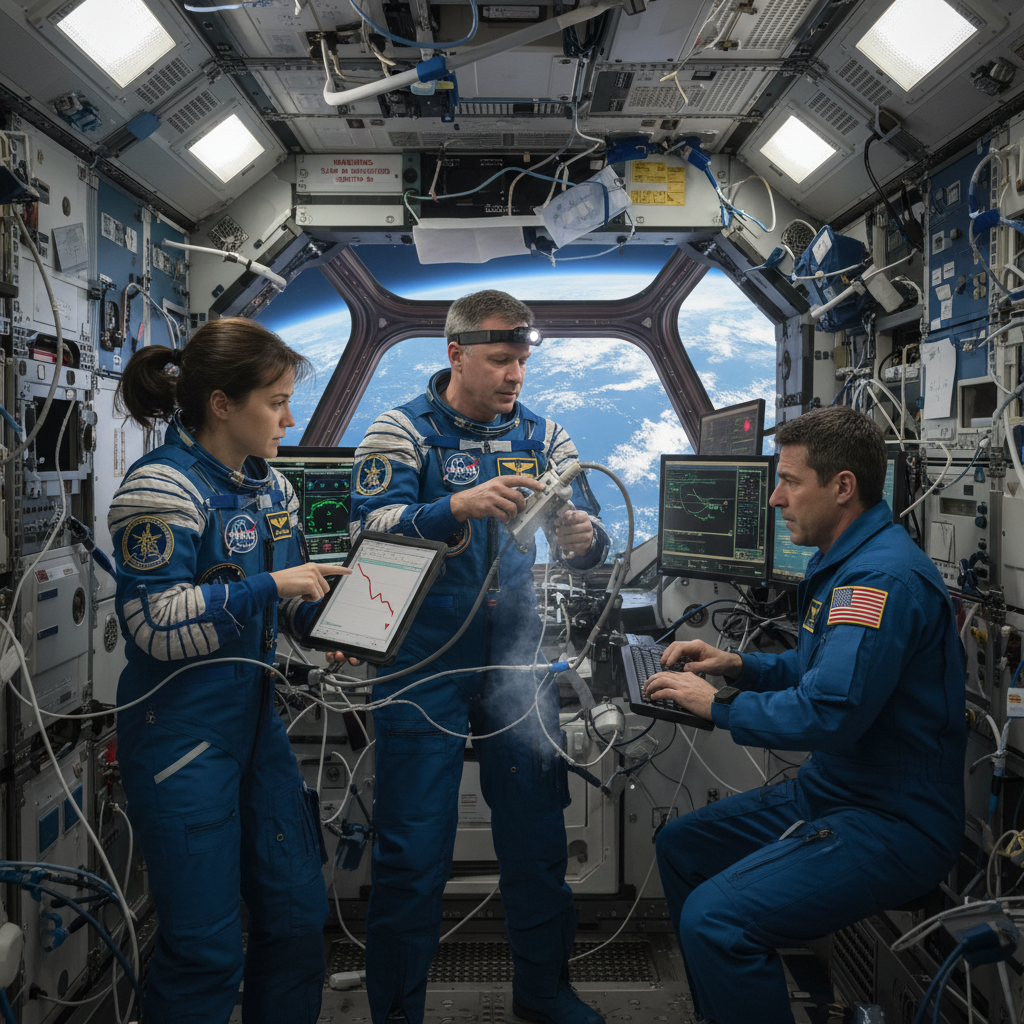
NASA faces increasing concern over a new air leak aboard the International Space Station which has delayed the upcoming commercial astronaut mission. Axiom Mission 4 faces postponement because of a critical air leak at the ISS.
NASA has officially acknowledged the mission delay but has not released extensive details about the situation. Sources who know the situation report that the leak is a major concern. Because the ISS is approaching its 30-year mark in space there is heightened vigilance for even minor problems.
An Old Problem Returns—In a New Way
The ISS has experienced air loss before this current issue. A persistent leak has been affecting the space station since 2019 and originates from the Russian Zvezda service module. The module launched in 2000 represents one of the International Space Station’s oldest components. The problem has been specifically linked to the PrK transfer tunnel inside the module. The PrK transfer tunnel creates a path between the Zvezda module and the critical docking port used by Russian Soyuz and Progress spacecraft.
Multiple repair attempts by Russian cosmonauts have been made on the PrK over time. The attempts at repairs failed to completely solve the issue. The crew’s efforts to fix the leak resulted in lowering the rate of air loss to a few pounds daily. The best solution discovered so far involves keeping the PrK hatch shut unless docking operations are required.
A few weeks prior the situation appeared to have reached a permanent solution. Roscosmos reported that they successfully completed repair work which fully sealed the PrK module. NASA confirmed the statement indicating that leak rates within the module had ceased.
Even after the initial repair work pressure readings aboard the ISS showed a continued decline. That raised a big question: The station continued to leak air even though the module had been sealed.
The experts have concluded that the hatch seal leading into the PrK module is most likely responsible for the air leak. According to this theory air enters the sealed PrK through those seals at a slow rate while maintaining stable pressure inside the PrK. The sensors provide no leak indication inside the module because air escapes from the rest of the station.
NASA is now closely monitoring the situation. A representative from the industry informed Ars Technica that NASA leaders have concerns about potential outcomes. NASA has decided to delay the launch of the Axiom-4 mission because of its current situation. NASA announced that deferring Axiom Mission 4 allows both NASA and Roscosmos more time to assess the current situation and decide if further troubleshooting measures need to be taken.
NASA has set the preliminary launch date for June 18. The timing of future events depends completely on how the leak problem progresses throughout the next few days.
There’s another layer to all this: There exists a potential threat that this leak indicates structural fatigue which is more severe.
High cycle fatigue becomes a concern for engineers when metals such as aluminum face repeated stress over time. Envision repeatedly manipulating a paperclip by bending it which will eventually break unexpectedly. Eventually, it snaps without warning. This failure mode emerges abruptly and poses significant safety risks.
In 1988 Aloha Airlines Flight 243 became a famous example when it experienced a mid-air decompression. Aircraft fuselage suffered a tear because metal fatigue compromised its structure. The crew’s successful landing highlighted the danger of accumulating fatigue which remains hidden until it causes a failure.
NASA considers structural cracking on the ISS as one of their primary concerns. The internal 5×5 risk matrix shows this issue as among the highest-ranking threats in both likelihood and severity. The situation is sufficient to maintain high alert status among agency engineers.
NASA has yet to provide additional information about the situation. The agency has neither arranged a press conference nor released detailed updates despite journalists from various outlets including Ars Technica asking multiple questions. The only official word remains: NASA reports that the International Space Station crew continues to perform standard operations without any safety issues.
And they are. Life aboard the ISS continues. The station maintains an outward calm yet experiences a slow air leak which prompts concerns about the longevity of its outdated systems.