- calendar_today August 11, 2025
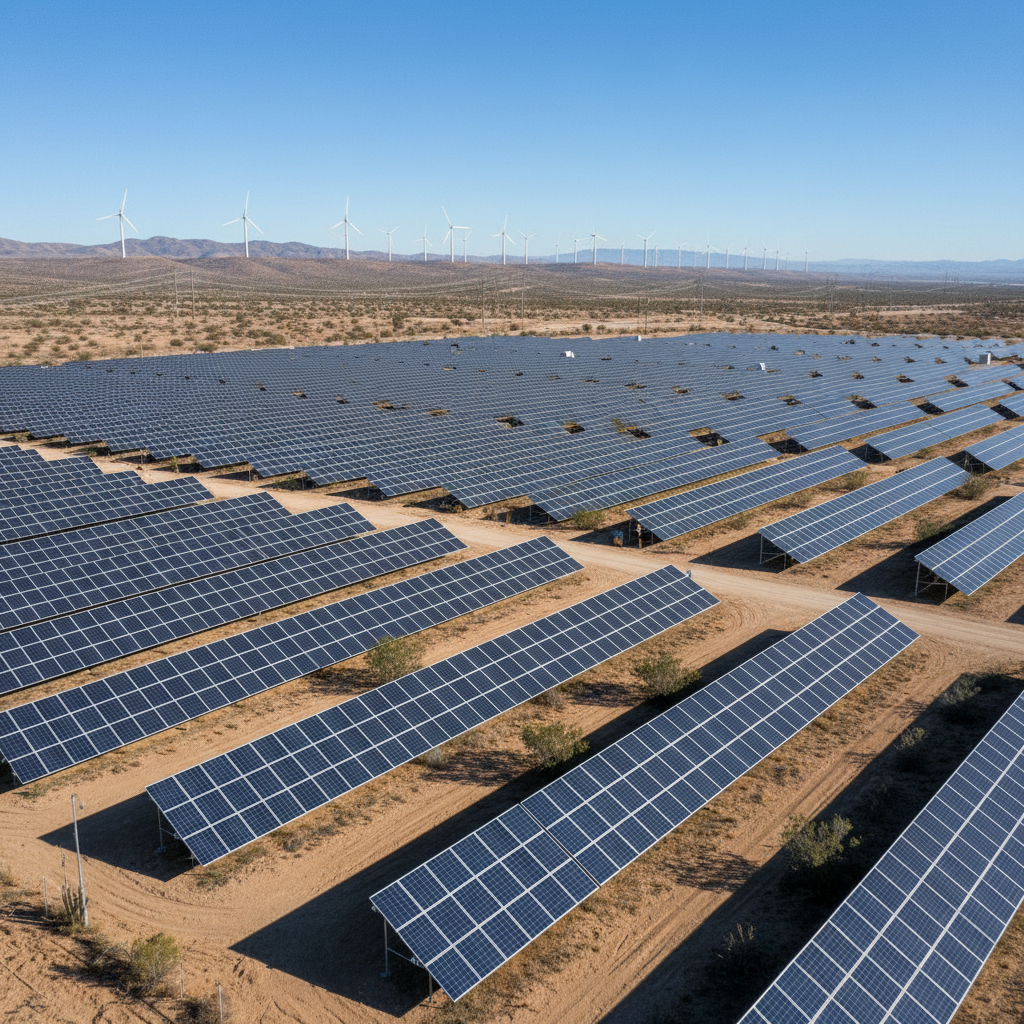
The renewable energy sector in the Southwest USA stands at an interesting crossroads in 2025. Significant drops in green energy stock prices have led investors to wonder whether these market movements represent a buying opportunity or a reason to exercise caution. Supported by federal incentives like the Inflation Reduction Act (IRA) and ambitious state policies in Arizona, New Mexico, and Texas, the region presents a unique energy investment landscape driven by abundant solar and wind resources.
Market Trends Impacting Southwest Investors
Leading green energy stocks have experienced sharp declines this year. Tesla (TSLA), which plays a major role in electric vehicles and energy storage, has seen shares fall over 45% year-to-date due to disappointing first-quarter results. First Solar (FSLR), integral to solar projects across the Southwest, has dropped more than 30%.
Locally, utilities such as Arizona Public Service and New Mexico’s PNM Resources are investing heavily in renewable projects, including expansive solar farms and wind power developments. However, stocks tied to these ventures have also reflected sector-wide volatility. Enphase Energy (ENPH), a leading solar microinverter supplier for residential systems in the Southwest, has dropped nearly 29%, despite expanding into international markets.
This volatility stems from broader economic uncertainties, higher operational costs, and intense competition in the sector.
Federal and Regional Policy Frameworks
The IRA remains a critical catalyst nationwide, providing a 30% Investment Tax Credit (ITC) for solar and wind energy projects, and Production Tax Credits (PTC) for renewable energy generation. These incentives underpin much of the Southwest’s renewable energy expansion.
At the state level, Arizona aims for 100% clean electricity by 2050 under its Clean Energy Standard, while New Mexico targets 80% renewable energy by 2040. Texas, with its vast wind power capacity, continues to lead in renewable energy production but faces ongoing regulatory debates around grid management and infrastructure upgrades.
Despite strong incentives, political and regulatory uncertainties in 2025 could influence the pace and scale of project development, making investment timing crucial.
Economic Factors Affecting Investments
The wider U.S. economic environment heavily impacts renewable energy investments in the Southwest. The Federal Reserve’s relatively high interest rates—around 4.25–4.5%—have pushed borrowing costs upward, challenging capital-heavy projects common in the region.
However, inflation easing to 2.8% in March 2025 may boost consumer confidence and infrastructure spending, positively affecting clean energy investments in Arizona, New Mexico, and Texas.
Investor sentiment is mixed but cautiously optimistic. Many fund managers are diversifying into infrastructure and clean energy ETFs as a hedge, a strategy that Southwest investors might find valuable given the local policy environment and infrastructure timelines.
Clean Energy ETFs and Their Regional Performance
ETFs like the iShares Global Clean Energy ETF (ICLN) and First Trust Clean Edge Green Energy ETF (QCLN) have mirrored the sector’s ups and downs. ICLN is down about 5% year-to-date, while QCLN has fallen close to 28% as of April 2025.
Despite short-term losses, these ETFs have delivered solid returns over five years, suggesting long-term investors willing to weather volatility could benefit from the Southwest’s growing clean energy market.
What Experts Are Saying
Energy analysts emphasize caution balanced with optimism. Maria Lopez, a clean energy strategist based in Phoenix, notes, “The Southwest’s abundant sun and wind create a strong foundation, but market volatility and regulatory hurdles require careful portfolio management.”
Goldman Sachs downgraded green energy stocks for Q2 2025, highlighting supply chain pressures and rising project costs that affect the region’s solar and wind expansions.
The International Energy Agency projects renewables will provide roughly 42% of U.S. electricity by 2030, with the Southwest playing a crucial role thanks to its natural resources.
Is Now the Time to Buy?
For Southwest investors, the answer depends on their goals and risk tolerance. Long-term investors (5 to 10 years) may view the current downturn as a chance to buy into leading companies at lower prices. The region’s commitment to renewable infrastructure, supported by federal and state policies, bodes well for growth.
Short-term or risk-averse investors might hold off due to high interest rates, political uncertainties, and ongoing market pressures.
Diversification remains vital. ETFs like ICLN and QCLN offer exposure to a broad range of clean energy technologies, helping investors navigate market fluctuations.
In 2025, green energy investment in the Southwest is not just a matter of environmental responsibility—it’s a financially significant sector shaped by policy shifts, economic forces, and technological innovation. While early 2025 has challenged investors, the long-term outlook remains positive for those aligned with this evolving market.
Ultimately, each Southwest investor must weigh their own timelines and risk appetite when deciding whether to buy green energy stocks now.