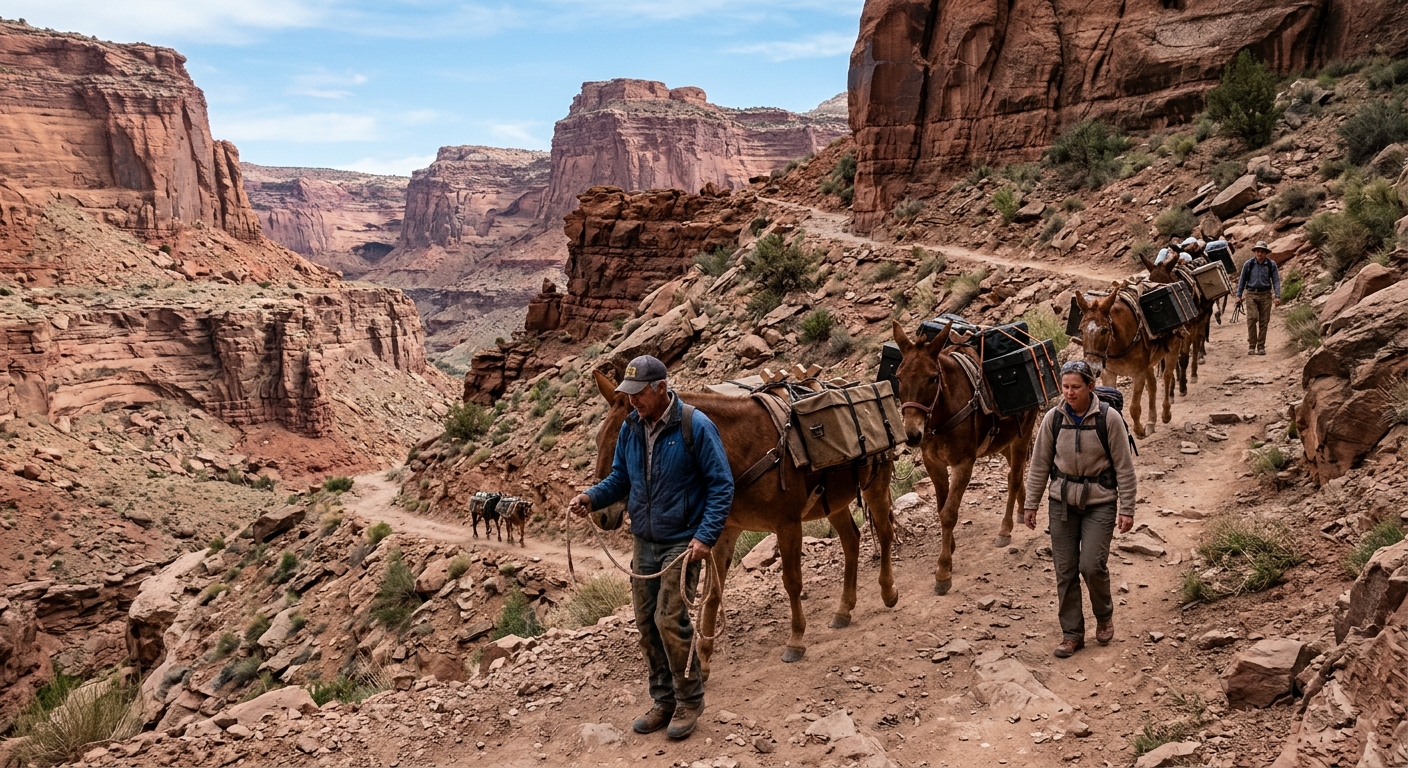
AI-generated illustration; not a photograph of the reported event.
- calendar_today November 2, 2026
Unique Voting by Mule in the Grand Canyon
In the remote depths of the Grand Canyon, the Havasupai Village stands apart from virtually every other community in the United States when it comes to voting. Residents of Supai, the only village at the bottom of the canyon, have their ballots delivered—and returned—by mule and horse trains as part of a tradition that combines history, practicality, and local partnership.
Origins and Purpose of Mule Ballot Delivery
This distinctive approach takes place in Coconino County, Arizona, and is viewed by county officials as a way of honoring the traditions of the Havasupai Tribe while forging a strong connection with one of its most remote precincts. "It's more organic," said Eslir Musta, the county’s elections director, about the mule ballot delivery method. This practice, which has been a standard in recent years, helps to build positive rapport with local residents and benefits the local economy through collaboration with the Havasupai Tribe’s tourism office, which provides the mules and wranglers.
Bipartisan Oversight Ensures Election Security
The process itself is highly organized and strictly follows election protocols. Packs marked "Coconino County Elections" are loaded onto the mules, and two staffers—each from a different political party—accompany the wranglers. This bipartisan team rides down the eight-mile trail to the village headquarters in Supai, ensuring transparency and integrity in the handling of election materials.
Challenges and Logistics of Ballot Transportation
Ballot and election equipment—including poll books, ballots, accessible voting devices, and even a Starlink router for internet connectivity—are transported over steep trails, with the journey down taking about 2.5 to 3 hours and the climb up to the rim at Hilltop lasting about two hours. Katherine Morgan, a returning staffer who has made several trips as part of the mule ballot delivery team, describes the journey as both demanding and rewarding—a unique way to experience the canyon's natural beauty while serving the community. The county ensures all critical supplies are protected, packing backups in case of loss along the trail, though so far nothing vital has been lost.
Supporting Tribal Voter Turnout
After Supai’s lone polling place closes, ballots and equipment are packed early the next morning for the return journey up the canyon, with staff transferring them to vehicles at the rim and delivering them to county headquarters by noon. The precinct consists of 155 registered voters, and while some residents prefer to vote by mail (those ballots are also carried out by mule), the majority choose to vote in person. Turnout in presidential years peaks at 30-40%—a figure officials hope will rise with continuing efforts to make voting accessible and meaningful to the tribe.
A Rare and Celebrated Election Practice
Mule-powered ballot transportation is nearly unheard of elsewhere. While other remote regions use helicopters, ferries, snowmobiles, or bush planes, the Coconino County mule train journey through the Grand Canyon is unique. According to Tammy Patrick of the National Association of Election Officials, no other U.S. jurisdiction relies on a system quite like this. She notes, "People love to talk about it because it's such an anomaly." The practice stands as a testament to overcoming geographic challenges and preserving local partnerships, ensuring that even the most isolated communities can participate in the democratic process.
Source: azcapitoltimes.com.