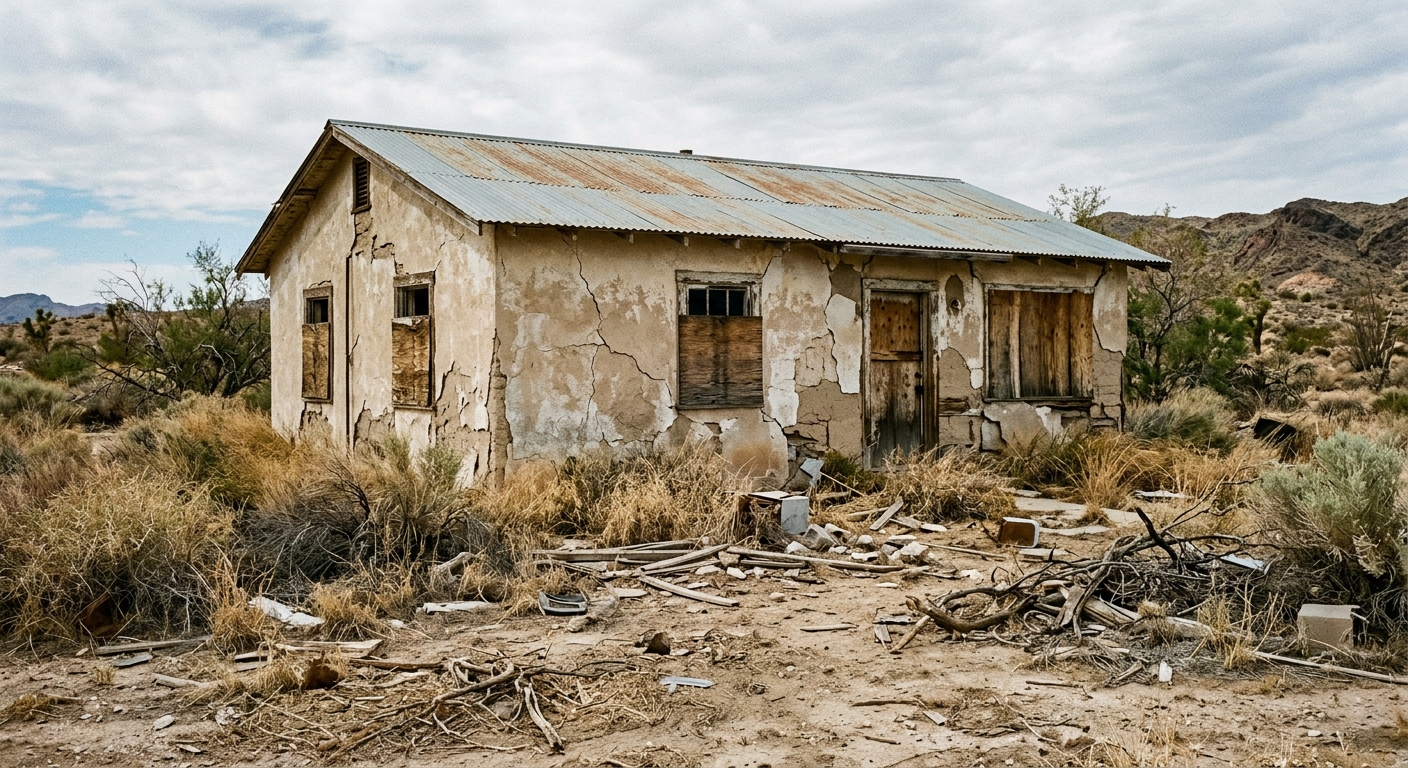
AI-generated illustration; not a photograph of the reported event.
- calendar_today June 20, 2026
In the Southwest USA, the persistent challenge of managing abandoned properties has placed a considerable strain on county governments, demanding resources that could be used elsewhere. Aiming to mitigate this burden, Arizona lawmakers have enacted Senate Bill 1067, bringing a pivotal change to how counties address the issue of abandoned and blighted properties.
Senate Bill 1067 Offers Financial Relief
The passage of Senate Bill 1067 introduces a solution long sought by local officials. Now, counties throughout Arizona, including those in the Southwest USA, are permitted to place county liens on abandoned properties that require cleanup due to public health hazards. This measure allows local governments to recover cleanup costs once the property is either sold or the lien is satisfied, effectively replenishing local government funding that previously was spent without guaranteed reimbursement.
Addressing Community Health and Safety
Abandoned and blighted properties often harbor unsafe structures, pest infestations, and hazardous waste—a combination that poses significant public health hazards. By granting counties the authority to act decisively and recover funds through property liens, the legislation aims not only to improve neighborhood safety but also to uphold taxpayer protection. Swift intervention also helps stabilize or increase local property values, benefiting the region as a whole.
Gila County’s Experience Highlights Need for Change
Communities like Gila County have experienced the financial pressure firsthand, spending about $250,000 over two years to address abandoned properties—funds that could have been allocated to essential infrastructure or emergency response. With the new law, officials foresee a reduced strain on county budgets, while still maintaining a vital focus on public safety.
Temporary Law with Future Prospects
The provisions of Senate Bill 1067 will come into effect 90 days after the conclusion of the legislative session and will last until October 1, 2028. Lawmakers, however, have already signaled intentions to remove the expiration date in future sessions, suggesting a long-term strategy to provide consistent support for counties handling these challenges.
Scope and Limitations of the New Legislation
While the new law enables counties to recoup money through property cleanup and property liens, it does not guarantee immediate or complete repayment in every case. Some abandoned properties may remain delinquent for years or not sell quickly enough to recover cleanup costs promptly. Despite these limitations, the law provides a structured path for local governments to reclaim at least a portion of their expenditures.
Potential Impact for Southwest USA Communities
The regional impact is expected to be significant. County leaders across the Southwest USA hope that these legislative changes will create a more sustainable approach to managing abandoned properties. By returning funds to county budgets, resources can be redirected to broader community needs, such as infrastructure repair, emergency services, or public health initiatives.
A Model for Taxpayer Protection
At its core, the new law aligns with the principle of taxpayer protection, preventing public funds from being unduly spent on properties that pose risks but offer no community benefit. As more counties in the region implement county liens as part of their property cleanup efforts, there is optimism surrounding increased efficiency in handling blighted properties and public health hazards.
Looking Forward
As implementation begins, counties across the Southwest USA will monitor how the provision affects budgets, property values, and community safety. While some challenges remain, the move is widely recognized as a step toward responsible stewardship and sound fiscal policy in local governance.