- calendar_today August 12, 2025
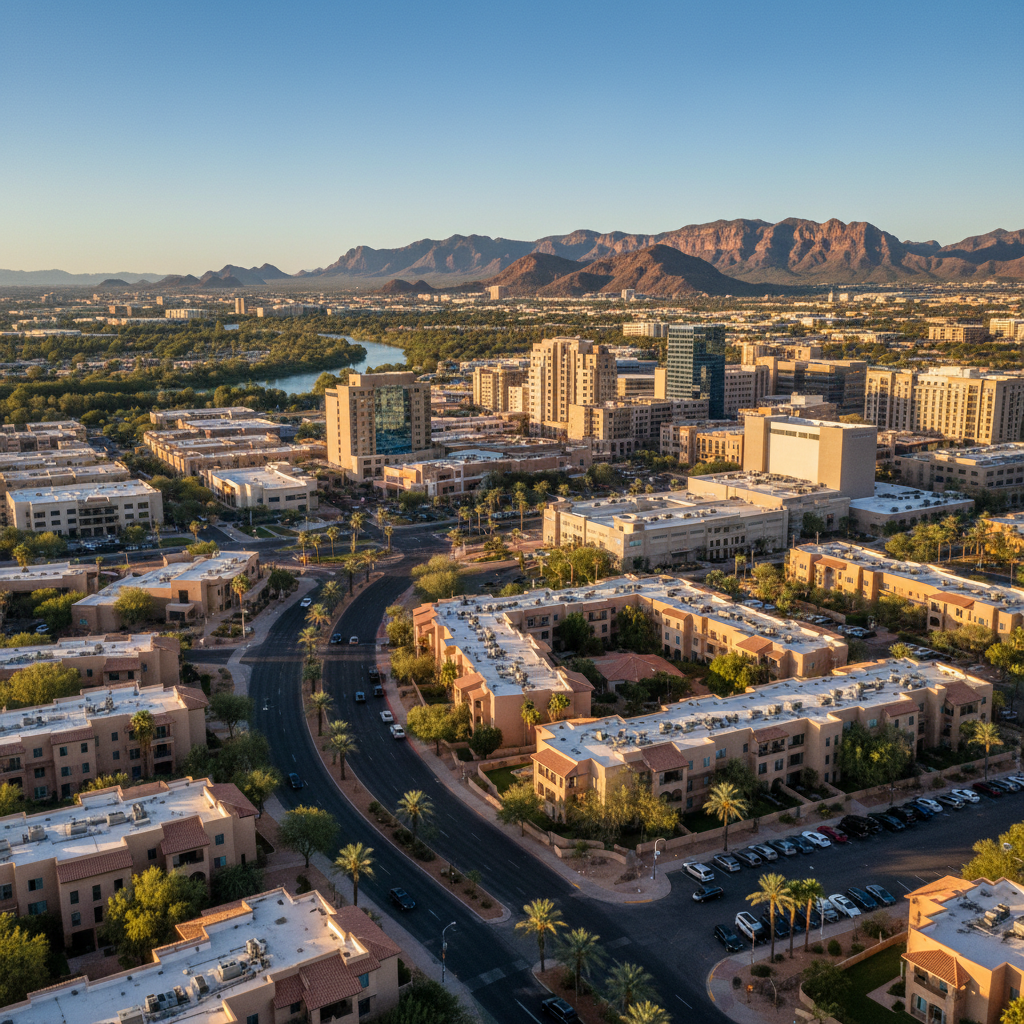
Southwest U.S. remains a notable outlier, with key metros in Arizona, Nevada, New Mexico, and parts of west Texas continuing to attract investors and remote-working buyers alike. What was once seen as a pandemic-driven boom is now demonstrating staying power rooted in economic diversification, demographic momentum, and infrastructure growth.
At the heart of this resilience is Phoenix, where housing demand has stabilized rather than declined. “We’re seeing a shift from speculative flipping to long-term rental holds,” says Maria Ortega, a broker with Desert Capital Realty. “Rent growth has cooled, but it hasn’t reversed. Investor interest is still steady, especially for multifamily units.”
Arizona: Growth Without Overheating
Phoenix’s rapid expansion over the past five years has raised questions about oversaturation. Yet, construction permits have declined slightly year-over-year, indicating a self-regulating market. Meanwhile, nearby Tucson has emerged as a secondary hotspot, offering lower price points and strong renter demand, especially among university students and retirees.
Statewide, Arizona’s economic base is shifting, thanks to new semiconductor and electric vehicle manufacturing plants. The resulting job creation has kept demand high for workforce housing, particularly in Maricopa and Pima counties.
Nevada: Las Vegas Bets on Long-Term Renters
After an unprecedented surge during 2021–2022, Las Vegas housing prices have plateaued, but they remain well above pre-pandemic levels. The short-term rental market has faced tighter regulations, prompting many investors to convert Airbnb units into long-term rentals.
“There’s a new type of landlord in Las Vegas,” notes urban planner and real estate consultant Joe Hines. “They’re targeting traveling nurses, tech workers, and retirees—people who want mobility but need stability.” Southern Nevada’s population continues to grow, fed by ex-Californians seeking lower costs and warmer climates.
Reno, by contrast, is attracting tech spillover from the Bay Area and is now a serious contender for high-earning remote workers. Housing supply remains tight, pushing prices up and creating opportunities for investors who entered early.
New Mexico: Albuquerque Steps Into the Spotlight
In New Mexico, Albuquerque has quietly become one of the Southwest’s best-performing real estate markets, thanks to a mix of affordability, infrastructure investment, and an emerging creative economy. The median home price remains under $375,000, making it one of the most accessible metro areas in the region.
“Out-of-state investors are finally noticing Albuquerque,” says Sarah Villanueva, a local investor who manages 12 properties across Bernalillo County. “We’re seeing more competition for duplexes and small multifamily units. Locals are adjusting, but affordability is still relatively intact—for now.”
New Mexico’s slow-and-steady approach to urban development may be paying off. Rather than explosive growth, the state has focused on measured improvements to transit, energy, and housing stock, setting the stage for sustainable expansion.
West Texas: Oil Towns Diversify and Draw Interest
In western Texas, El Paso and Midland are redefining their real estate narratives. While Midland still heavily relies on oil and gas, diversification is underway, particularly in logistics, renewable energy, and healthcare.
El Paso, once overlooked by national investors, is now benefiting from border trade expansion and federal infrastructure funding. Affordable property values, combined with rising rental demand, have made it increasingly attractive for cash-flow-driven portfolios.
“Texas metros like Austin and Dallas have become saturated,” says Houston-based analyst Kevin Sosa. “Now investors are casting wider nets, and El Paso is coming up more frequently in those conversations.”
Measured Growth With Selective Acceleration
Across the Southwest, 2025 is shaping up to be a year of recalibration, not retreat. The speculative energy that defined the early 2020s has been replaced by more grounded, data-backed decision-making. Investor sentiment remains cautiously optimistic, especially in metros where job growth and population inflows continue to align.
The rise of secondary and tertiary cities in the region is a clear theme this year. Investors are seeking markets that offer long-term rental stability, modest appreciation, and less exposure to policy risk or oversupply.
As interest rates remain elevated and affordability pressures persist in coastal states, the Southwest offers a compelling balance of opportunity and realism—especially for investors playing the long game.