- calendar_today August 28, 2025
Why KPop Demon Hunters Feels Like a Love Letter to K-Pop Fans
It’s been just two weeks since KPop Demon Hunters premiered on Netflix, but the film has already made it to the global streaming service’s top 10 charts in 93 countries, earning more than 33 million views worldwide since it came out in June. Fans have already produced fan art, while daily calls for a sequel grow louder online.
The surprise hit, an animated fantasy adventure film which takes audiences into the high-energy world of Korean pop, features two imaginary bands who are already taking over real-world music charts in the US. Since the 20 June release, the film’s two fictional bands, a cutesy all-female group called Huntr/x and their demonic-looking rivals Saja Boys, have outperformed industry titans BTS and Blackpink, with seven of its songs featured in the Billboard Hot 100. On Spotify’s US chart, the two bands’ songs rank first and second, a rare placement for imaginary artists.
Fans follow the trio of Huntr/x band members Rumi, Mira, and Zoey as they balance their careers as global superstars with a secret mission to save the world from supernatural forces. Scenes of the bands fighting over the fate of the world are interspersed with elaborate stage performances, slick action sequences, and a heartwarming plot about friendship, trust, and staying true to yourself. The mashup of humour, tears, and a hint of fantasy action has made the film a hit with viewers of all ages and across cultures.
But while the dazzling cinematography and the storyline reel people in, it's music is what makes KPop Demon Hunters a cultural phenomenon. KPop Demon Hunters’ Korean-Canadian co-director Maggie Kang, a former music video producer, model, and photographer, has been inspired by K-pop idols from her childhood to make a K-pop video game movie. For Kang and her team, music was a critical element of the storyline — not an interruption but a major weapon against evil, so it had to be good. “It gives the film a surprising level of maturity,” says Lashai Ben Salmi, a Paris-based community leader with a focus on Korean culture and diaspora in Europe.
The Korean cultural attaché at the French embassy, who first heard of KPop Demon Hunters from her fans and was surprised to learn of its success in France and Europe, says its attention to detail has been key to its international success. To ensure high production values, Kang and the other director, Chris Appelhans, worked with a Korean label and enlisted some of the industry’s biggest names. Teddy Park, a record producer famous for his work with Blackpink, and Grammy award-winning producer Lindgren, known for his tracks for BTS and TWICE, created original songs that could easily fit into the real-world K-pop repertoire. Amanda Golka, a Los Angeles-based content creator who is not particularly familiar with K-pop, is already a fan. “I have been blasting the soundtrack from Spotify every time I’m in the car,” she says. “It’s fascinating how music can be such a universal language.”
KPop Demon Hunters draws on Korean tradition while capitalising on a global trend.
Cultural authenticity has been another winning factor. K-pop, K-dramas, and Korean cinema have already become mainstream in the US and other Western markets, but KPop Demon Hunters takes the representation a step further by merging the pop subculture with elements of everyday Korean life. In addition to traditional dining etiquette, the film features multiple scenes in front of Korea’s famous heritage sites such as the ancient city walls, Hanuiwon clinics, public bathhouses, and Namsan Tower. It is also a break from many other Korean shows or films in the US, with some Hollywood viewers noting on social media that it goes beyond the stereotypical. “It makes Koreans feel like we are being represented in a good way, rather than everything being so…White-washed,” says Ben Salmi.
For its Korean settings, the production team travelled to the country and explored folk villages for small scenes, as well as photo-shooting and filming in Myeongdong streets and locations with traditional clothing. Details have been written into the animation itself. While all of the characters speak in English, the animated lip movements match the Korean pronunciation, and the overall facial reactions appear authentically Korean. Korean words or lyrics are occasionally heard in some scenes, further rooting the film’s story in its cultural setting.
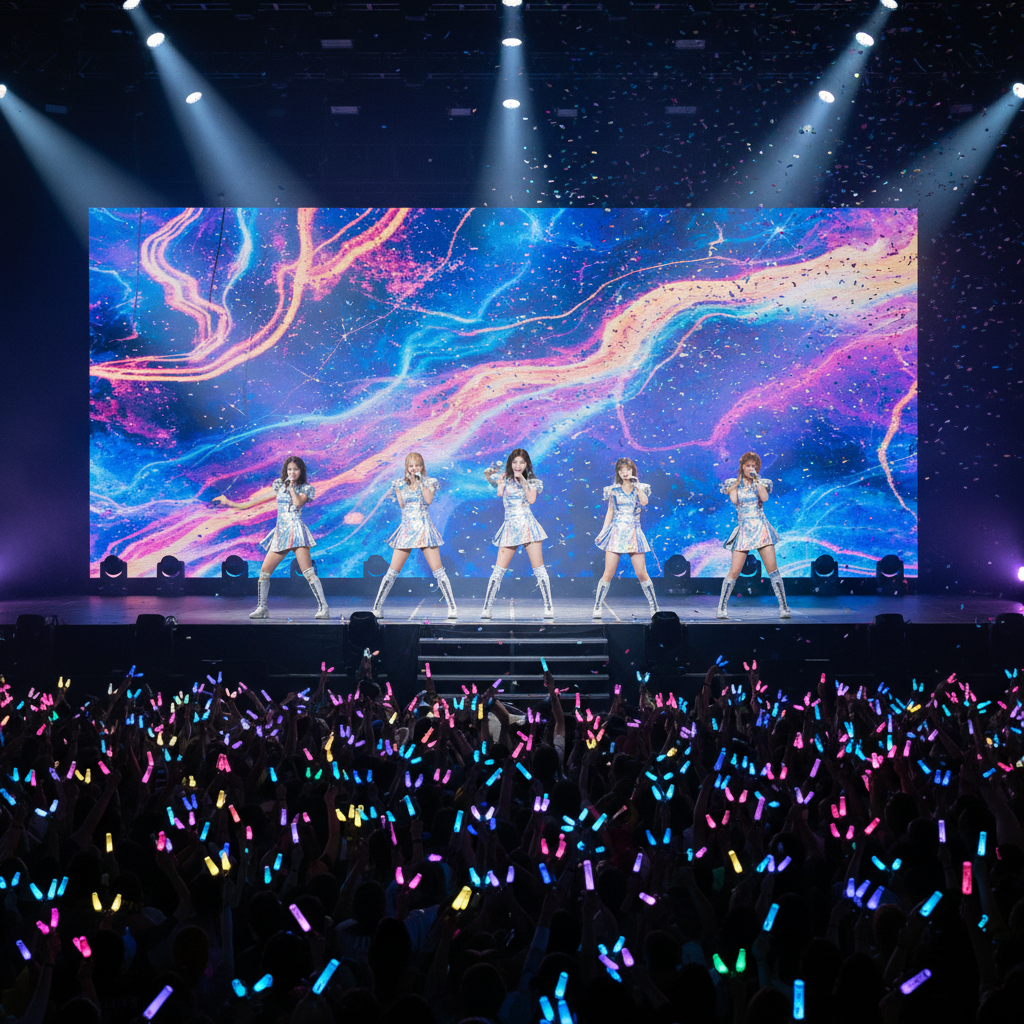
In addition to Korean settings, the film authentically represents the K-pop fandom — from fan signing events and the glow of colour-coded light sticks, to Kalgunmu (synchronised dance routines performed by all fans at once) and Korean placards. Some American viewers have even used the film to learn more about K-pop culture. “KPop Demon Hunters is where I first learned that K-pop is a bigger community than just listening to the music and video, and follows whole groups versus just individuals. After this, I got deep into the K-pop fan culture. Each band member in KPop Demon Hunters has a specific role like real-life K-pop bands,” writes one Reddit user.