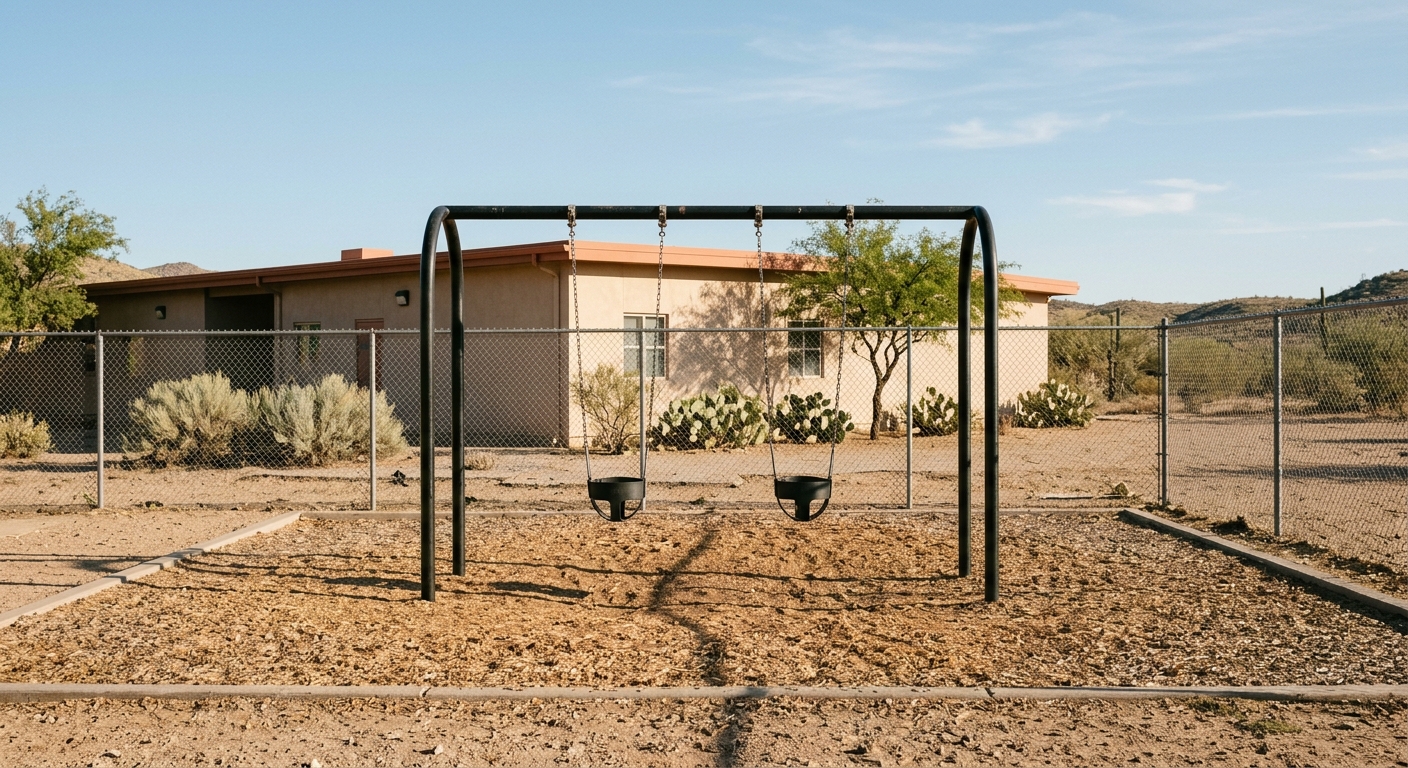
AI-generated illustration; not a photograph of the reported event.
- calendar_today October 22, 2026
Arizona Schools Respond to Declining Enrollment
Public schools across Arizona are confronting a surge in school closures, as k12 enrollment numbers continue to drop. The impacts are being felt most keenly in districts such as the Scottsdale Unified School District, where two schools will shutter at the end of the 2026-27 academic year. The closures of Copper Ridge K-8 and Laguna Prep, impacting around 900 students, come after years of shrinking student populations and renewed concern from parents about the fate of neighborhood schools.
Demographic Shifts Underpinning the Trend
The causes behind Arizona’s student enrollment decline are multi-faceted. District leaders and researchers cite declining birth rates, an aging population, and sharply rising housing costs as key contributors. In the Scottsdale Unified School District, student enrollment has fallen by about 2% each year since 2010, a net loss of roughly 6,000 students. Fewer young families can afford to live in areas like North Scottsdale, where home values exceeded $850,000 as of September—about double the state's average home price, according to Zillow. Superintendent Scott Menzel noted that many neighborhoods once full of children now house aging residents whose children have grown and moved elsewhere.
Wider Trends in Arizona and Nationwide
This phenomenon is not limited to Scottsdale. Statewide, Arizona public school enrollment has dropped by more than 54,000 students since 2016, with kindergarten enrollment down 16% since that year. Data from Arizona State University’s Morrison Institute for Public Policy show a 36% drop in state births from 2007-2022—one of the largest declines in the nation. The ASU W.P. Carey School of Business further notes that Arizona’s median age has increased significantly, reflecting larger percentages of residents over 70 years old. Nationally, public schools lost about 1 million students over the past decade, echoing Arizona’s trend.
Parents and Policymakers Voice Concerns
Parents such as April Beauboeuf in Scottsdale have expressed worries over the future of remaining schools in their neighborhoods. As more schools close, she fears that areas like North Scottsdale will become less appealing to young families, exacerbating the student enrollment decline. Policymakers are also divided on how to address the closures. At the state level, the debate encompasses public school funding, the role of school choice and Arizona’s Empowerment Scholarship Account (ESA program), and the potential district consolidation.
Election-Year Debates and Policy Proposals
The issue has taken center stage in Arizona’s midterm elections. Superintendent candidates differ on causes and solutions; Democrat Teresa Leyba Ruiz blames low per-pupil spending and expanded funding for the ESA program, arguing this funding could otherwise stabilize district schools. Republican Kimberly Yee points to aging communities and high living costs, suggesting districts must better manage enrollment downturns and avoid overbuilding. Other policymakers, like Rep. Matt Gress, have floated the idea of a statewide commission to consider district consolidation for greater efficiency—a proposal still under discussion.
The Role of School Choice and ESA Expansion
Arizona’s ESA program has expanded dramatically since 2022, now including about 100,000 students—roughly 7% of the state’s school-age children—who can use state funds for public, charter, or private schooling. Recent data show that nearly 60% of new ESA students previously attended public schools, indicating a notable shift enabled by broader school choice policies. Policy analysts suggest that this movement reinforces existing enrollment declines in traditional public districts, urging enhanced data-driven and transparent decision-making in closure processes.
Looking Ahead
Arizona's school closures are closely linked to demographic and economic changes, including falling birth rates and surging housing costs. With dramatically shifting enrollment patterns, policymakers and community members alike are grappling with difficult decisions on how to fund, organize, and preserve access to quality education as conditions continue to evolve across the state.
Source: azcapitoltimes.com.