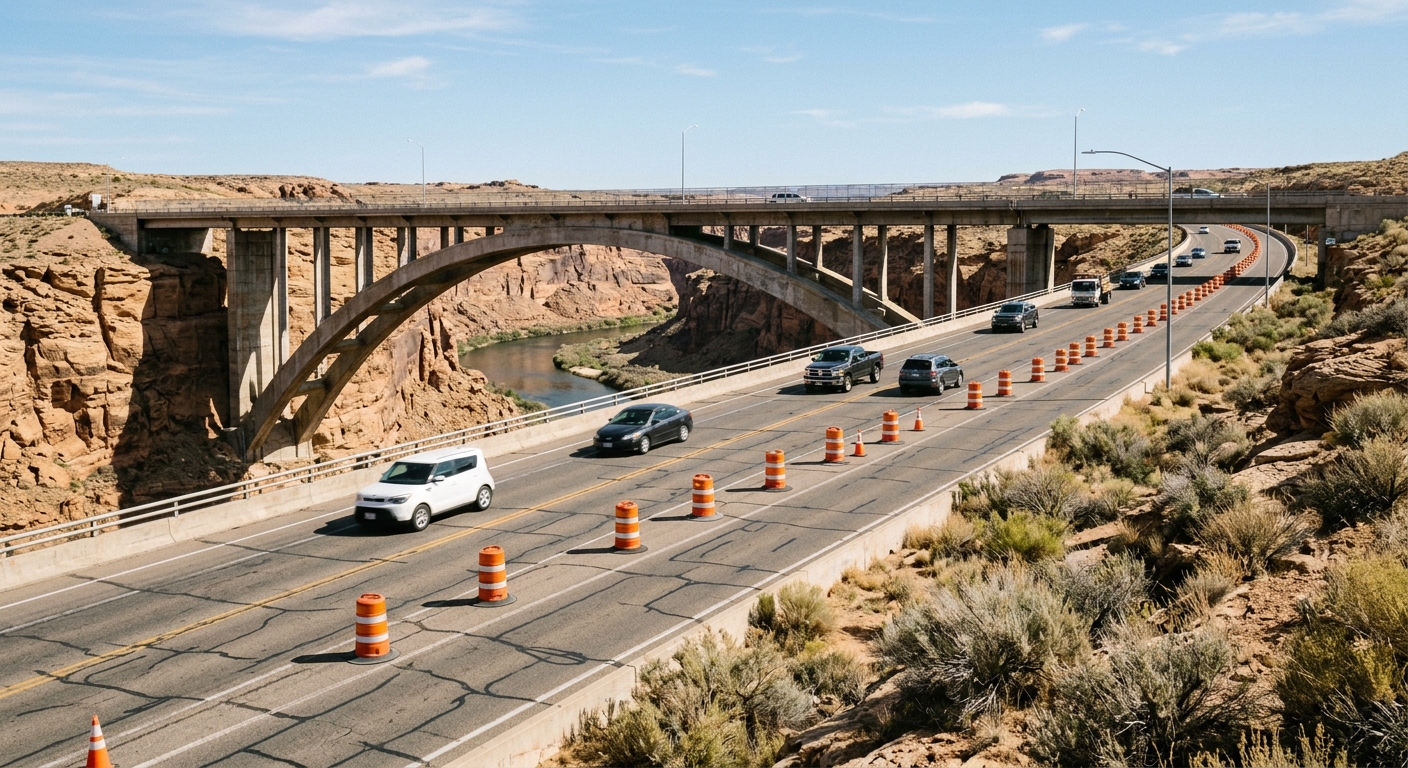
AI-generated illustration; not a photograph of the reported event.
- calendar_today July 27, 2026
The Southwest USA is preparing for a critical infrastructure upgrade as the New Mexico Department of Transportation (NMDOT) sets the stage for the Nogal Canyon bridge replacement on Interstate 25 in Socorro County. The project will replace two heavily traveled truss bridges and marks a significant commitment to road safety and efficiency in the region.
Major Plans for I-25 Bridge Project
Construction for the I-25 bridge project is slated to begin in early 2027. The Nogal Canyon bridges, originally constructed in 1968, currently accommodate over 15,000 vehicles each day. With wear and tear taking its toll after more than five decades of use, NMDOT has made the bridge replacement project a top priority to address growing safety concerns and evolving transportation needs throughout Socorro County.
Comprehensive Traffic Control Plan
One of the central elements of this undertaking is a detailed traffic control plan designed to keep the interstate open throughout construction. The plan ensures that both directions of I-25 will remain accessible, with one lane maintained in each direction at all times. To accomplish this, project engineers will utilize temporary lane shifts and carefully phased crossovers, allowing crews to safely perform the bridge construction while minimizing disruption for daily commuters, travelers, and freight transport.
Phased Construction for Public Safety
The Nogal Canyon bridge replacement project will proceed in three main phases. The first phase involves building temporary crossovers to redirect traffic. Once these are in place, crews will begin work on the northbound bridge before transitioning to construct the southbound bridge. This systematic approach is designed to prioritize the safety of the workforce and the community, while maintaining steady traffic flow across the bridge reconstruction period.
Modern Upgrades and Regional Impact
A key component of the project is reconstructing the highway approaches on I-25 and regrading the descent into Nogal Canyon. This adjustment will align the roadway with modern design speeds and boost long-term drivability. By the project’s conclusion, Southwest USA drivers can expect two modern two-lane bridges, significantly improving traffic efficiency and bolstering the reliability of Socorro County infrastructure. The broader project reflects a commitment to proactive maintenance that will benefit local communities and the region’s commerce for decades to come.
Securing Federal and State Funding
The estimated cost of the Nogal Canyon bridge replacement stands at $142.5 million. Funding includes a substantial $71.25 million federal highway grant, underscoring the national significance of this route, with the remainder coming from matched state and federal transportation allocations. This collaborative investment highlights New Mexico transportation priorities, focusing on the safety and modernization of the interstate corridor and reinforcing connections across the Southwest USA.
Ensuring Safe and Reliable Infrastructure
Interstate 25 construction at Nogal Canyon not only replaces deteriorating bridges, but also safeguards a vital transportation artery for local residents and regional industries. The approach reflects best practices in bridge construction and infrastructure management, with a strong emphasis on minimizing construction impacts through phased scheduling and clear communication with stakeholders. Once complete, the new bridges will provide enhanced safety and travel experiences for all road users in Socorro County and beyond.
As the project moves forward, NMDOT is expected to keep the public informed on progress, timelines, and any adjustments needed to the traffic control plan. Residents and travelers throughout the Southwest USA will benefit from the modernized infrastructure, representing a milestone in ongoing efforts to maintain and improve critical transportation links in the region.